Note: I started writing this a long time ago as part of #mynerdstory but never got around to finishing it until recently. So I changed it a bit when I noticed it had been over 20 years since I first used the internet.
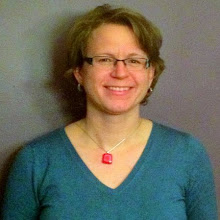
I found this picture the other day. It's me on graduation day at Acadia, twenty years ago this month. A lot has changed since then.
In the picture, I'm in Carnegie Hall, where the Computer Science department had their labs, classrooms and offices. I'm sitting in front of a Sun workstation, which ran a early version of
Mosaic. I recall the first time I saw a web browser display a web page, I was awestruck. I think it was NASA's web page. My immediate reaction was that I wanted to work on that, to be on the web.
As a I've mentioned before,
my Dad was a manager at a software and services firm in Halifax. He brought home our
first computer
when I was 9. Dad was always upgrading the computers or fixing them
and I'd watch him and asked lots of questions about how the
components connected together. In junior high, I taught myself BASIC
from the manual, wrote a bunch of simple programs, and played so many
computer games that my dreams at night became pixelated. When I was 16,
I started working at my Dad's office doing clerical work during the school break. One of my tasks was to run a series of commands to
connect to
BITNET via an
accoustic coupler using
Kermit
and download support questions from their university customers. I
thought it was so magical that these computers that were so physically
distant could connect and communicate.
In high school, I
took computer science in grade 12 and we wrote programs in Pascal on
Apple IIs. My computer science teacher was very enthusiastic and
welcoming. He taught us sorting algorithms, and binary trees, and other
advanced topics that weren't on the curriculum. Since he had such an
interest he taught a lot of extra material. Thanks Mr. B.
When
it was time to apply to university, I didn't apply to computer
science. I don't know why, my grades were fine and I certainly had the
background. I really lacked self confidence that I could do it. In
retrospect, I would have been fine. I enrolled at Acadia in their
Bachelor of Business Administration program, probably because I liked
reading the Globe and Mail.
I arrived on campus with a
PC to write papers and do my accounting assignments. The
reason I had access to a computer was that the company my Dad worked
for allowed their employees borrow a computer for home use for a year
at a time, then return it. Otherwise, they were prohibitively expensive
at the time. My third year of university I decided that I was better
suited to computer science than business so started taking all my
elective courses from the computer science faculty. I still wanted to
graduate on in four years so I didn't switch majors. It was such a
struggle to scrape together the money from part-time jobs and student
loans to pay for four years of university, let alone six.
One
of my part-time jobs was helping people in the university computer labs
with questions and fixing problems. Everything was very text
based back then. We used
Archie to search for files, read books transcribed by the Gutenberg project and use
uudecode
to assemble pictures posted to
Usenet groups. I applied for a Unix
account on the Sun system that only the Computer Science students had access to. It was
called dragon and the head sysadmin had a sig that said "don't flame me,
I'm on dragon". I loved learning all the
obscure yet useful Unix commands.
My third year I had a
386 portable
running Windows 3.1. I carried this computer all over campus, plugging
it in at the the student union centre and working on finance projects
with my business school colleagues. By my fourth year, they had
installed Sun workstations in the Computer Science labs with Mosaic
installed. This was my first view of the world wide web. It was
beautiful. The web held such promise.
I
applied for 40 different jobs before I graduated from Acadia and was offered a job in Ottawa working for the IT department of Revenue
Canada. A ticket out of rural Nova Scotia! I didn't like my first job
there that much but they paid for networking and operating
system courses that I took at night. I was able to move to a new
job in a year and started being a sysadmin for their email servers that
served 30,000 users. It was a lot of fun and I learned a tremendous
amount about networking, mail related protocols and operating systems. I
also spent a lot of time in various server rooms across Canada
installing servers. Always bring a sweater.
I left
after a few years to work at Nortel as technical support for a telephony
switch that offloaded internet traffic from voice switches to a
dedicated switch. Most internet traffic back then was via modem which
were longer duration calls than most voice calls and caused traffic
issues. I took a lot of courses on telephony protocols, various Unix
variants and networking. I traveled to several telco customers to help
configure systems and demonstrate product features. More time in cold
server rooms.
Shortly after Mr. Releng and I got
married we moved to Athens, Georgia where he was completing his postdoc. I found a great job as a sysadmin for the UGA's
computer systems division. The group provided FTP, electronic
courseware and email services to the campus. We also secured a lot of hacked Linux servers set up by unknowing graduate students in various
departments. When I started, I didn't know Linux very
well so my manager just advised me to install Red Hat about 30 times and
change the options every time, learn how to compile custom kernels and
so on. So that's what I did. At that time you also had to compile
Apache from source to include any modules such as ssl support, or
different databases so I also had fun doing that.
We
used to do maintenance on the computer systems between 5 and 7am once a
week. Apparently not many students are awake at that hour. I'd get up at 4am and drive in to the university in the
early morning, the air heavy with the scent of Georgia pine and the
ubiquitous humidity. My manager M, always made a list the night before
of what we had to do, how long it would take, and how long it would take
to back the changes out. His attention to detail and reluctance to
ever go over the maintenance window has stayed with me over time. In
fact, I'm still kind of a maintenance nerd, always figuring out how to
conduct system maintenance in the least disruptive way to users. The
server room at UGA was huge and had been in operation since the 1960s.
The layers of cable under the tiles were an archeological record of the progress of cabling within the past forty years. M typed on a DVORAK
keyboard, and was one of the most knowledgeable people about all the
Unix variants, and how they differed. If he found a bug in Emacs or any
other open source software, he would just write a patch and submit it
to their mailing list. I thought that was very cool.
After
Mr. Releng finished his postdoc, we moved back to Ottawa. I got a job
at a company called
OTI as a sysadmin. Shortly after joining, my
colleague J said "We are going to release an open source project called
Eclipse, are you interested in installing some servers for it?" So I
set up Bugzilla, CVS, mailman, nntp servers etc. It was a lot of fun
and the project became very popular and generated a lot of traffic. A
couple years later the Eclipse consortium became the Eclipse Foundation
and all the infrastructure management moved there.
I moved to the release engineering team at IBM and started working
with S who taught me the fundamentals of release
engineering. We would spent many hours testing and implementing new
features in the build, and test environment, and working with the
development team to implement new functionality, since we used Eclipse
bundles to build Eclipse. I have written a lot about that before on my
blog so I won't reiterate. Needless to say, being paid to work full
time in an open source community was a dream come true.
A
couple of years ago, I moved to work at Mozilla. And the 20 year old
who looked Mosaic for the first time and saw the beauty and promise of
the web, couldn't believe where she ended up almost 20 years later.
Many people didn't grow up with
the privilege that I have, with access to computers at such a young
age, and encouragement to pursue it as a career. I thank all of you who
I have worked with and learned so much from. Lots still to learn and
do!
Read more...