I recently read the book hackers: heroes of the computer revolution by Stephen Levy. It looks back at the cast of characters that were involved in the early years of computing, starting in the late 1950s until the 1980s. The word hacker in this context doesn't mean someone that was breaking into machines for malicious intent, but rather someone who is breaking new ground in software and hardware. The book is divided into three sections. The first third of the book concentrates on people writing software at university labs such as MIT, the second third describes people making their own hardware in Silicon Valley computer clubs in the 1970s, and the final third looks at the beginnings of the PC game industry in the 1980s.
Interesting things I learned.
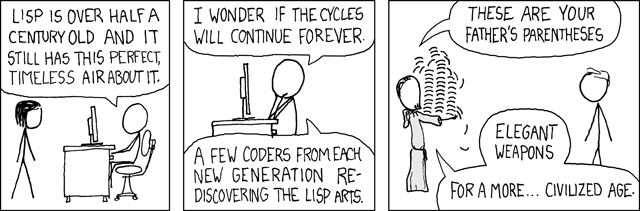
- LISP was invented in 1958. Old school.
- People used to single-handedly write a game and and then sell it to a game company such as Broderbund or Sierra On-line for a royalty on sales. Like 30% of sales. A best selling game could make a young developer very very rich in a short period of time.
- Silicon Valley used to be called Silicon Gulch. Silicon Valley sounds classier.
- Bill Gates sold an early version of BASIC to a computer club which then copied it and distributed it to their members for free. He then published a letter in a club newsletter that stated "As the majority of hobbyists may be aware, most of you steal your software."...."Who can afford to do professional work for nothing?" A young Bill Gates writing about piracy in 1975. History repeats itself.
- Early hackers spent days, weeks even months on end in the lab without showering. They also didn't date much. Coincidence? No.
- The process to bring the Apple II to market and the interactions between Steve Jobs and Steve Wozniak were pretty interesting.
The book also talks about the "hacker ethic", which underpins many things that we see in current open source communities today. From the book
"
Information should be free.
Mistrust authority--promote decentralization.
Hackers should be judged by their hacking, not bogus criteria such as degrees, age, race or position.
You can create art and beauty on a computer.
Computers can change your life for the better".
This book looks at the technical advancements that these hackers implemented, but is also interesting to see the culture as these nascent communities evolved. Also, it also describes the first computer conferences and magazines. It's also interesting to note the incredible passion and effort that these hackers dedicated to their professional endeavours often had negative repercussions in their personal lives.
Anyways, if you are interested in reading about early computing history, this is a great book. The first computer that my Dad (yes it runs in the family) brought home in the early 1980s was an Osborne , so I felt rather nostalgic reading about the this time period.
Read more...